|
The outlook for 6 forest pests and diseases in Maine
A combination of deep freezes and control measures have knocked back some prominent Maine forest pests and diseases over the past couple of years, providing relief to Maine trees after years of growing infestations.
But state officials warned a gathering of Maine forest landowners last week that this trend may not continue as new outbreaks spread, winters warm from climate change and drought conditions hamper tree defenses.
“Everything we do is impacted by these climate conditions, so drought doesn’t help anything in the forest health world,” said Mike Parisio, entomologist for the Maine Forest Service, at the Maine Agricultural Trades Show in Augusta on Jan. 14.
Hemlock woolly adelgid
Most notably, populations of the hemlock woolly adelgid were slowed by cold winter temperatures due to their susceptibility to frosts, Parisio said. The small insect originates outside of Maine and has been concentrated in the Midcoast for over two decades, feasting on its namesake tree.
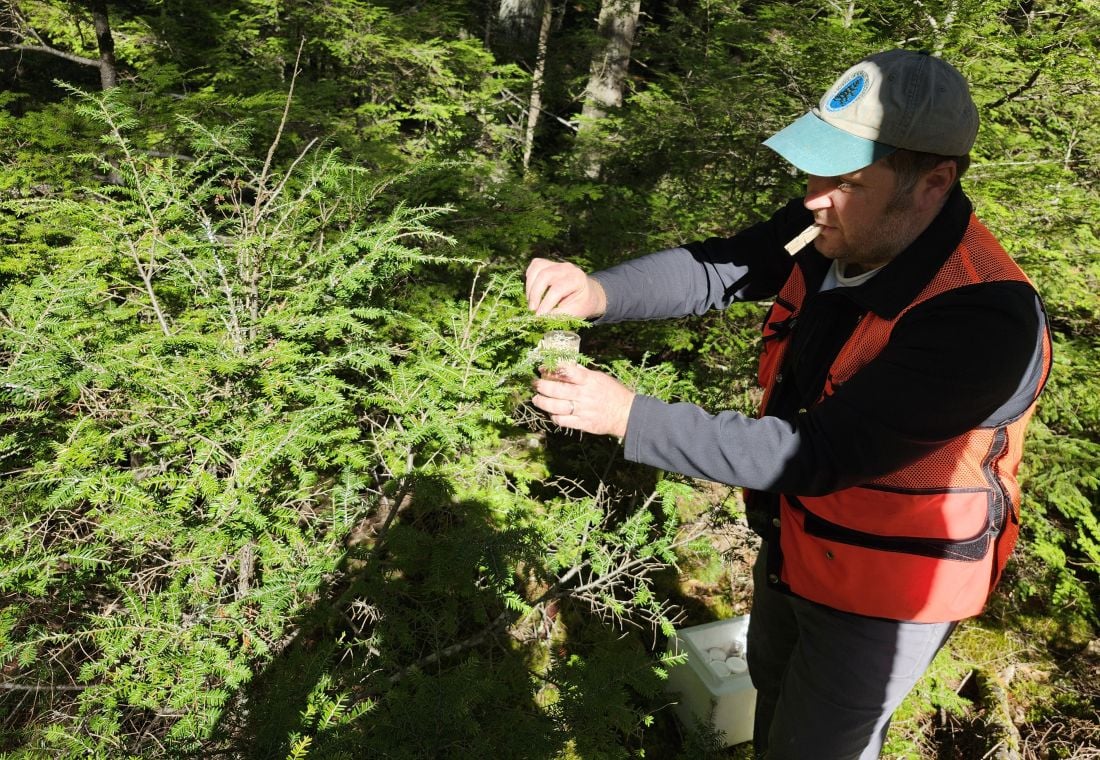
After years of expansion the adelgid was only found in a couple new towns last year due both to the cold spells and a coordinated effort from the Maine Forest Service, local landowners and land trusts to release predator beetles that prey on the adelgid.
But Maine can’t count on those winter adelgid diebacks moving forward, Parisio said, meaning the adelgid could migrate further inland, away from the moderate coastal temperatures.
“We're having more and more survivorship here in Maine, which, again, would increase its ability to move inland into other areas that it’s historically been kept out of by weather,” Parisio said.
Browntail moth
Maine has had some of the most success with curtailing invasive browntail moth populations. The moth’s caterpillars can cause respiratory issues and painful rashes upon contact with human skin, and the state has led a widespread campaign to exterminate them by cutting down their winter webs from their host trees before they can wreak havoc.
Browntail moths had an especially steep decline over the past year — from a peak coverage area of 150,000 acres in 2022 to just under 5,000 acres in 2025.
Red pine scale
The opposite trend is unfolding for red pine scale, a tiny, pinhead-sized insect from Japan that is killing off scores of Maine’s red pines in quick succession. Red pine scale is found throughout New England and has concentrated in Downeast Maine, throughout Mount Desert Island and Acadia National Park, but its small size makes new infestations difficult to detect.
“This is a very fast acting disease complex,” Parisio said. It can kill a stand of red pines “from the time of infestation, which you may not even be aware of visually, in just two years.”
Invasive emerald ash borer
Invasive emerald ash borer populations also gained ground in 2025, migrating north to three new counties: Somerset, Waldo and Hancock. The metallic green, half-inch-long beetles fly under the radar after they burrow into ash trees and lay their eggs.
Ash are a culturally, economically and ecologically important species in Maine. Wabanaki Nations have woven brown ash bark into baskets for centuries, while white ash is a valuable timber tree.
An emerald ash borer infestation means near certain death for the host tree, said Parisio, and it only takes 10 years for the tiny beetle to bring it toppling down. The Maine Forest Service runs an ash borer monitoring program and uses biocontrol measures similar to the hemlock wooly adelgid, releasing teeny wasp-looking insects that feast on parasites.
“Wherever there's [emerald ash borer] in Maine, and we have a suitable release site, we'll continue to pursue these efforts,” Parisio said. “We certainly do rely on private landowners … if they’re willing.”
Beech leaf disease
One of the fastest spreading parasites in Maine is beech leaf disease, which has engulfed and defoliated a vast number of Maine’s beech trees in a mere five years, according to Parisio.
Paired with beech bark disease, which causes unsightly cankers on the tree’s exterior, the diseases can weaken beech trees and rob forest wildlife of the nutritious nuts they produce.
Spruce budworm
Last, a less prevalent outbreak of the endemic spruce budworm has been cropping up in Aroostook County, defoliating some of the region’s evergreen trees. Spruce budworm larvae have run rampant in the Adirondacks of northern New York and parts of Quebec, recently jumping over the Canadian border into Maine.
The Maine Forest Service has had success curtailing the outbreak with targeted pesticide applications — part of the state’s “early intervention strategy” of detection and treatment.
“This is the concept of EIS, to detect these hot spots early [and] treat them when they're at a manageable size, knowing that it's not a one and done,” Parisio said. |