What Superfund cuts and PFAS cleanup delays could mean for Maine
During its first term and again this year, the Trump administration has repeatedly emphasized its commitment to cleaning up America’s toxic waste sites and addressing harmful “forever chemicals.”
In a list of “100 top environmental accomplishments” published last month, the Environmental Protection Agency touted several actions it took to remediate contaminated Superfund sites as well as combat toxic per- and polyfluoroalkyl substances, commonly known as PFAS or “forever chemicals.”
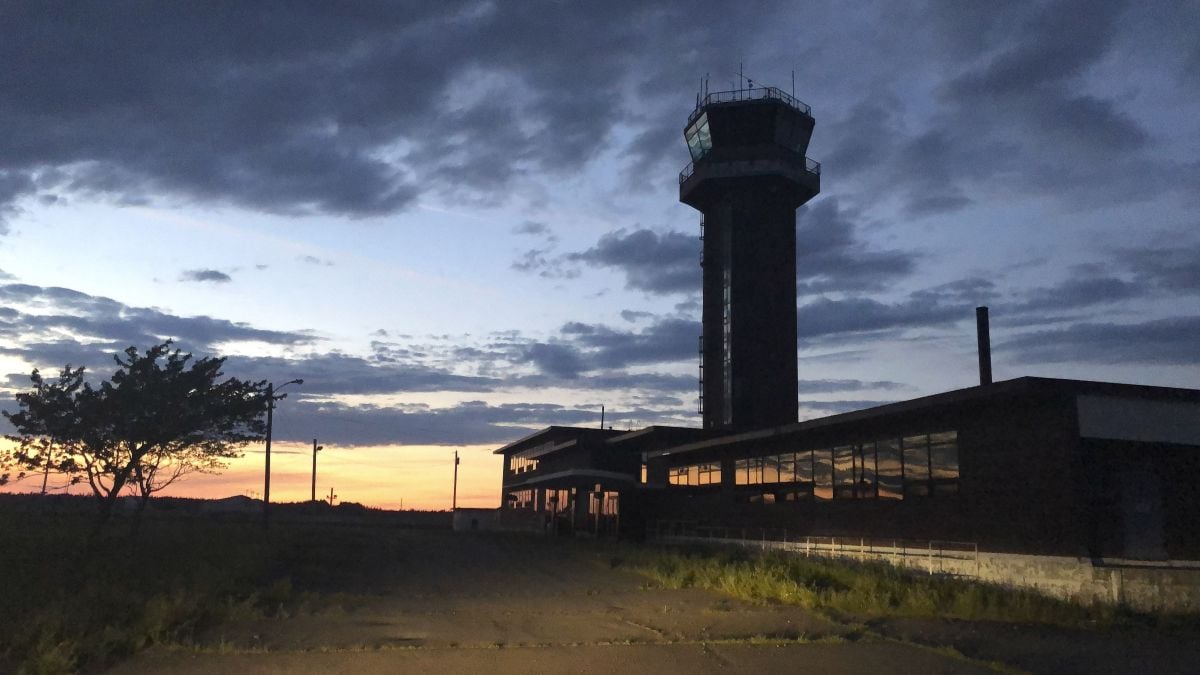
Among the agency’s list of PFAS wins was finalizing an order “requiring removal of PFAS foam and system cleaning” at Brunswick Executive Airport, following the spill of nearly 1,500 gallons of PFAS-laden firefighting foam at the former Navy site in August 2024.
“We will keep working tirelessly to secure success after success for America's environment and families nationwide,” EPA Administrator Lee Zeldin said in a statement announcing the list.
But the Superfund program is facing a potentially drastic cut in appropriated funding next year, and the Pentagon recently extended its timeline for PFAS cleanups at dozens of military installations, leading environmental advocates and several Maine lawmakers to worry that the Trump administration could stymie progress at polluted sites in Maine.
As part of its sweeping proposed cuts to the EPA, the White House asked Congress to slash $254 million from the historically underfunded Superfund program, which was established in 1980 and is responsible for addressing sites contaminated with lead, mercury and other industrial pollution.
In its 2026 budget request, the Trump administration stated "there is no need for additional funding for Superfund cleanup" because of the projected $1.6 billion that is expected to be available to fund the program next year from taxes Congress reinstated with its passage of the Infrastructure Investment and Jobs Act and the Inflation Reduction Act.
In July, the Senate Appropriations Committee, chaired by Maine Republican Sen. Susan Collins, passed its version of the EPA appropriations bill for fiscal year 2026, cutting just 5 percent of EPA’s overall funding compared to last year — far less than what the White House and the Republican-controlled House are targeting. However, the Senate bill, if passed into law, would roughly maintain the White House’s
request to cut Superfund program funding nearly in half.
Maine is home to 13 active Superfund sites, including former military installations and mining, milling and chemical facilities, several of which have languished on the list for decades. The Natural Resources Council of Maine, an environmental nonprofit, condemned the proposed cuts to the Superfund program in a lengthy September report, arguing they would “extend the period of time that Mainers and our environment
will be exposed to pollutants from these sites and postpone the day when these sites may be reused for other purposes, revitalizing communities and enabling economic development.”
Matthew Felling, a spokesperson for Sen. Angus King, said the Trump administration hasn’t provided details about which sites would be impacted by future cuts.
“While it’s possible that a 50% cut slows down all work, it also could mean that some project clean-ups are halted entirely,” Felling wrote in an email, adding it would be premature to comment further until more information is available.
Sen. Susan Collins’s office did not respond to a request for comment.
At the same time, the Department of Defense has quietly delayed PFAS cleanup efforts at more than 100 military installations, some by nearly a decade, the New York Times first reported in September. In Maine, affected sites include the former Loring Air Force Base in Limestone and the former Brunswick Naval Air Station in Brunswick — both of which are on the Superfund program's active National Priorities List and require long-term remediation.
A Maine Monitor review of DOD progress reports from March 2025 and September 2024 show the department's timeline for completing a PFAS remedial investigation at Loring has been pushed back six years — from June 2026 to September 2032. The cleanup timeline at Brunswick has also been extended — from December 2024 to December 2026.
The Maine Department of Environmental Protection, which works closely with the EPA on Superfund sites within the state, told The Maine Monitor it is aware of the PFAS remediation timeline being pushed back at Loring, but said work at the 9,500-acre site continues, including developing plans for long-term monitoring.
“The multi-phased remedial investigative work has extended the overall timeline for the PFAS [remedial investigation] and ensuing [feasibility study] but was necessary to adequately address critical data gaps that were identified in the process of determining base-wide nature and extent of contamination,” David R. Madore, Maine DEP’s deputy commissioner, said in an email. “The timeline for the PFAS-related cleanup process at Loring has been modified as the investigation unfolded to address site-specific conditions and needs that were better understood as the work and PFAS-related policies progressed; this is a typical part of the remedial process, especially on a large site and in the context of emerging contaminants.”
As for potential cuts to the Superfund program, Madore pointed out that the U.S. Air Force is responsible for the cleanup at Loring and that the ongoing work there is not funded through the EPA Superfund program, but rather the Base Realignment and Closure program and the Defense Environmental Restoration Program.
In a pair of letters to Secretary of Defense Pete Hegseth in recent months, dozens of lawmakers, including three members of Maine’s congressional delegation — Sen. King and Reps. Chellie Pingree and Jared Golden — demanded an explanation and condemned the delay as “unacceptable.”
Gabrielle Mannino, a spokesperson for Pingree, told The Maine Monitor that the department has not responded to the bipartisan letter House lawmakers sent in October.
“Congresswoman Pingree has long pushed for strong PFAS cleanup and mitigation efforts, and she believes Maine communities deserve straight answers about why cleanup milestones are slipping and what the Department of Defense intends to do to get remediation back on track,” Mannino said. “She is working to obtain a full explanation from DoD and will continue pressing for timely, accountable cleanup efforts in Maine and nationwide.”
The DOD, which the Trump administration renamed the Department of War, did not immediately respond to a request for comment.
Luke Frankel, a staff scientist at the Natural Resources Council of Maine, had not heard about the DOD delaying PFAS cleanup efforts at sites in Maine, but said extended inaction will prolong the period that neighboring communities will be exposed to chemicals that are known to harm human health.
“This work that is now delayed is just the remedial investigation, not the actual remediation itself, so it could be well beyond 2032 before any actual PFAS remediation is performed on the site,” he said of the former Loring Air Force Base. “This de-prioritization of addressing toxic chemicals released into our environment, along with the proposed cuts to the Superfund program overall, is consistent with the Trump administration’s agenda to put profits over the health and safety of the American people.”
Jonathan Judkins, the president and CEO of the Loring Commerce Centre, a state-funded entity spearheading redevelopment of the former military site, told The Maine Monitor that the DOD cleanup delay is something he and his team will “keep in mind and plan accordingly for.” But he stressed that PFAS contamination is largely concentrated around the runway — an area that he said is unlikely to be used for anything other than aviation.
“Yes, it’s bad that the soil has PFAS in it,” he said. “It’s only ever going to have airplanes flying over the top of it. There’s very minimal interactions that would cause any of that PFAS that’s dormant to move into any water systems. It would be different if that area was set for construction for hundreds and hundreds of projects.”
|