|
|
Good morning:
I’m an elder millennial with young children, which means most of my conversations revolve around either sleep (who’s doing it, or, more likely, who isn’t), sickness (welcome to the plague years) or housing (can you believe this sold for that much, what ill-advised DIY renovation project are you attempting this month, etc.). When I’m waiting for our infant to go back to sleep at 2 a.m. I often find myself scrolling through Zillow, ogling other people’s hardwood floors.
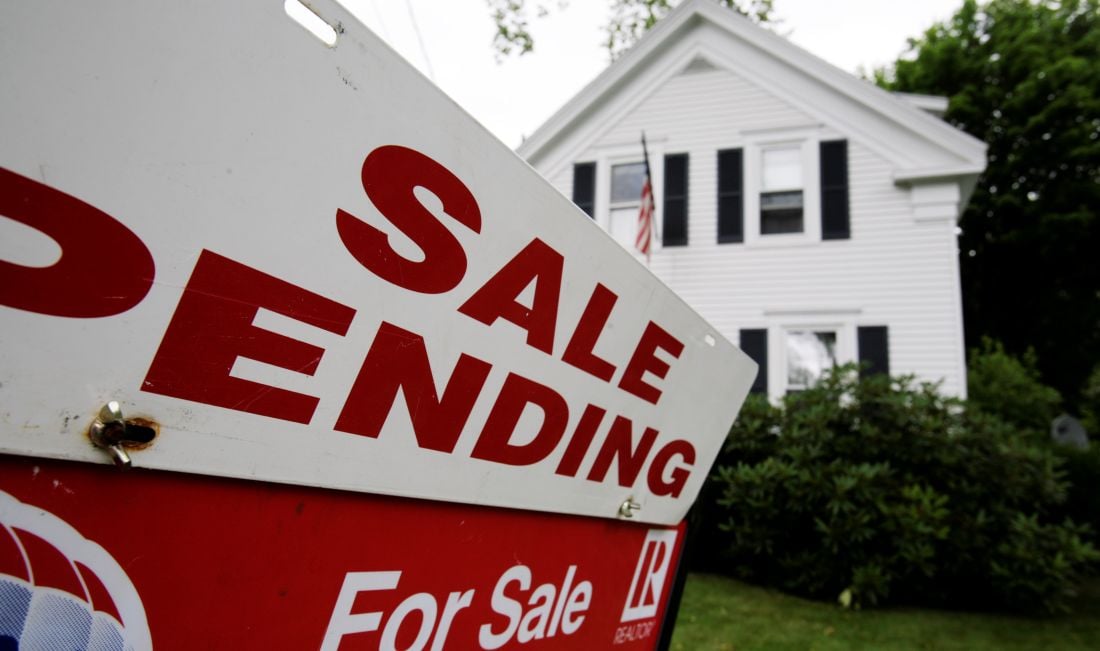
So of course I devoured Housing Reporter Caitlin Andrews’ story this week on what Maine is doing with funding generated by the state’s real estate transfer tax. The tax, which collects money from both buyers and sellers each time a property is sold, is projected to bring in $57.4 million this year alone.
Also this week, Rural Government Reporter Dan O’Connor has a great story on growing pains in the western Maine town of Albany; Emily Bader dives into how the state is spending (or, in some cases, not spending) its opioid settlement funds, and I talk to Monitor reporters Emmett Gartner and Sean Scott about tariffs, forestry and identification rules for local law enforcement on the latest episode of The Maine Monitor Radio Hour.
Stay warm –
Kate
|
|
|
|
|
Maine’s pool of money from taxes on home sales is growing. How is it being used?
A recent debate in the Legislature over funding for homeless shelters highlights the competition over revenue from the state’s real estate transfer tax.
Read this story by Caitlin Andrews
|
 |
|
|
|
|
New data shows Maine has yet to spend nearly two-thirds of its opioid settlement funds four years after payments began: The Maine Opioid Settlement
Support Center at USM launched a new dashboard this week to track spending. Read this story by Emily Bader
|
|
|
A fast-growing Maine community resists the idea of becoming a town again: “It would be quite onerous becoming a town,” said the “unofficial mayor” of Albany Township, which is growing due to the influence of the Bethel area’s four-season tourism economy. Read this story by Daniel O'Connor of The Maine Monitor and Bangor Daily News
|
|
|
March ‘radio hour’ discusses tariffs, law enforcement identification: The show offers a behind-the-scenes look at Maine Monitor reporting. Listen to the episode.
|
|
|
|
|
|
|
|
|
|
Note: Monitor Local publishes stories on Downeast and Western Maine every Saturday. Here are some highlights from this weekend. For more, visit our website.
|
|
|
Bill to provide $45 million in farm funding fails House vote: Machias land stewards who backed the funding measure face growing challenges as its future remains uncertain. Read this story by Melissa S. Razdrih
|
|
|
Straw poll of Wilton voters favors Wilton-Jay police merger: The question of whether to merge the Jay and Wilton police departments could come before voters as soon as the June 9 primary. Read this story by Bob Neal
|
|
|
Bram Public Policy Lab at Colby College collaborates with Waterville to study effectiveness of paramedicine program: Researchers say that for every five 911 calls, the city could save money if paramedicine responds to at least two of them. Read this story by Charley DiAdamo
|
|
|
 |
|
|
Only 11 arrested during ICE’s Maine surge had criminal records, new data show: The expansive dataset undercuts the federal government’s claim that agents targeted the “worst of the worst” criminals during a five-day sweep of southern Maine. Read this story by Callie Ferguson of the Bangor Daily News
|
|
|
Schumer had a plan to win back the Senate. But some Democrats aren’t on board: Democrats are trying to win back the Senate. But they are fighting over how to do it. Read this story by Joey Cappelletti of the Associated Press
|
|
|
Have feedback or a correction to send to Kate Cough? Send it to her directly via email: kate@themainemonitor.org.
The Maine Monitor is a publication of the Maine Center for Public Interest Reporting, an independent and nonpartisan nonprofit news organization that produces investigative journalism. We believe news is a public good and keep our news free to access. We have no paywall and do not charge for our newsletters. If you value the reporting we do for Maine, please consider making a donation! We cannot do this reporting without your support.
|
|
|
|
|
|
|
|
|
|
|