|
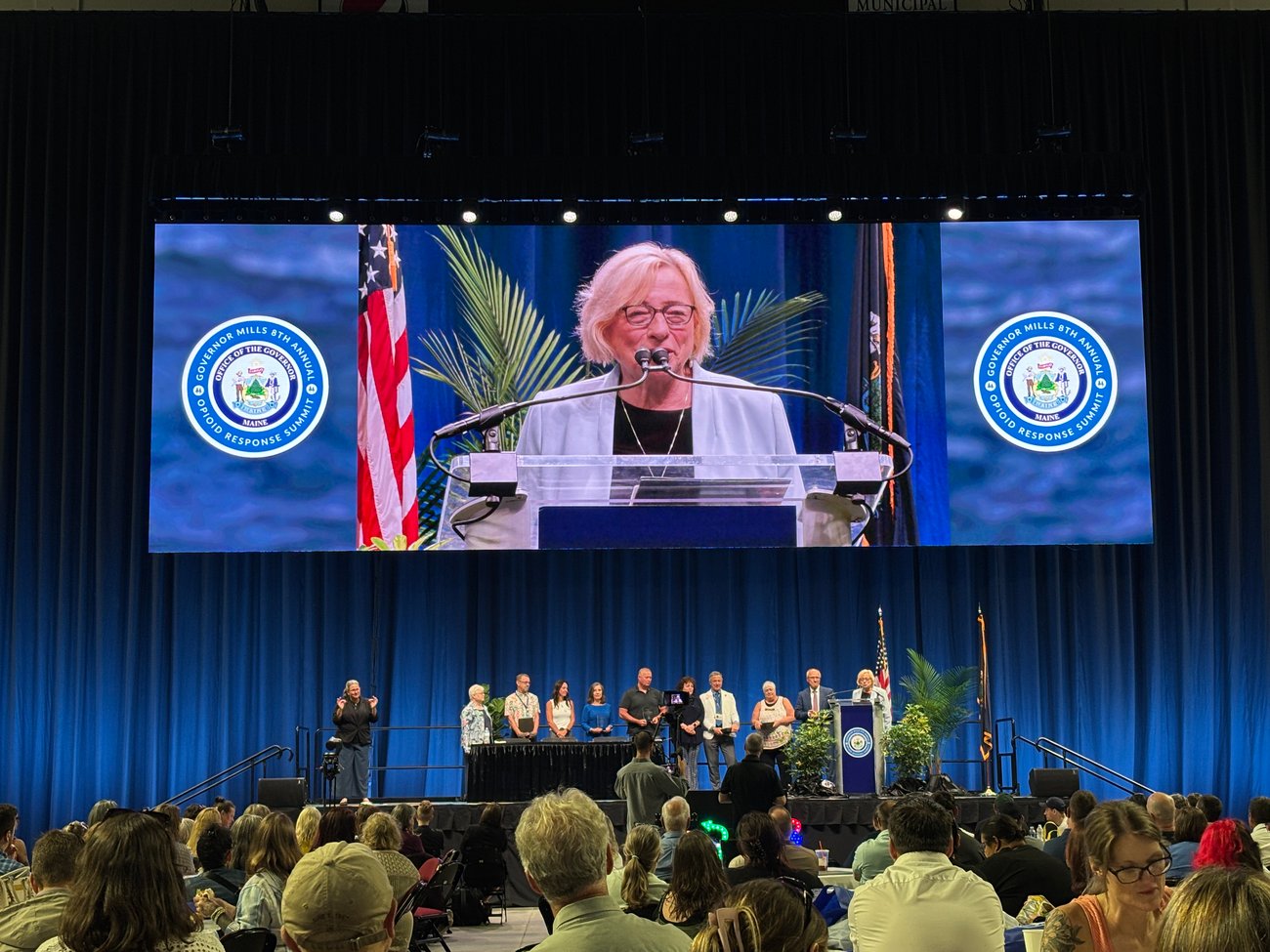
Gov. Janet Mills speaks at the 8th annual Opioid Response Summit in Bangor on Thursday. Photo by Emily Bader. |
 |
|
|
|
Building recovery connections in rural Maine
In the “frontier county” of Piscataquis, there’s generally one rule of thumb for anyone trying to make a difference in the lives of its 17,000 residents: Be creative.
In one of the largest counties by land area east of the Mississippi River with a population smaller than the city of Bangor, the most vulnerable people aren’t living in encampments or hanging out downtown or sleeping at a shelter.
They’re “living in campers deep in the woods or couch surfing,” said Crystal Hoffman, the county’s OPTIONS (Overdose Prevention Through Intensive Outreach, Naloxone, and Safety) liaison.
“Being in a remote area creates independent, resilient people. These are people who are not used to asking for help, because, honestly, historically, help hasn’t been there,” Hoffman said at the annual Opioid Response Summit in Bangor on Thursday. |
|
|
| READ THIS STORY |
|
|
|
|
|
|
|
|
|
Over my three-plus years at The Maine Monitor, I’ve spent a lot of time tracking how Maine is spending the millions of dollars from nationwide settlements reached with pharmaceutical companies accused of supercharging the opioid epidemic. I began to realize many recipients, especially counties, were spending a good share of their funds on the same thing: medication-assisted treatment in jails.
I wanted to know more about how that money was being used, and whether it was working. Over the past year, with the support of The Pulitzer Center, I’ve spoken to more than 50 county officials, sheriffs, jail administrators, health experts, community advocates and people who have been imprisoned to examine how Maine jails came to be some of the largest addiction treatment providers in the state, and how, as one source told me, these facilities can serve as a pivotal point of public health.
I made multiple visits to four jails located across the state, filed dozens of records requests, listened to hours of legislative hearings, met people at several recovery centers and reviewed hundreds of pages of documents to unravel what is and isn’t working with the way Maine’s jails are treating addiction. My four-part series examining this complicated topic is coming soon. I hope you’ll read it.
|
 |
|
|
|
|
|
|
|
Have feedback, a correction or know of something we should look into? Send it to our newsroom. You can also email The Monitor's editors: editors@themainemonitor.org.
The Maine Monitor is a publication of the Maine Center for Public Interest Reporting, an independent and nonpartisan nonprofit news organization that produces investigative journalism. We believe news is a public good and keep our news free to access. We have no paywall and do not charge for our newsletters. If you value the reporting we do for Maine, please consider making a donation! We cannot do this reporting without your support. |
|
|
|
|
|
|
|
|
|
|